



.webp)


%2520Thumbnail.webp)
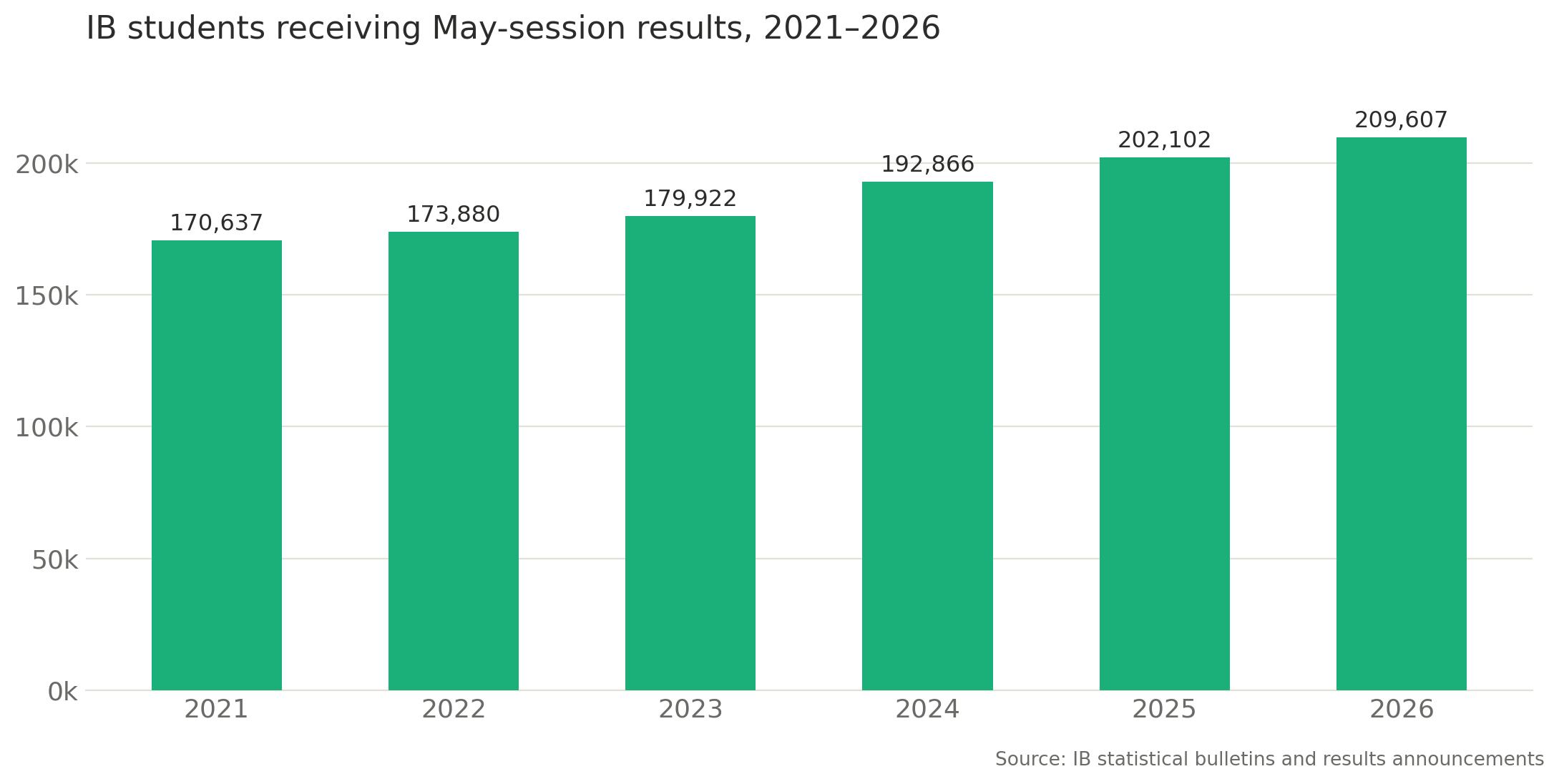
On 6 July 2026, 209,607 students across 159 countries received their IB Diploma Programme and Career-related Programme results, the largest May cohort in the programme's history and a 3.7% increase on 2025.
The May 2026 results
Here are the headline numbers for May 2026:
- Global average DP score: 30.88 (up from 30.58 in 2025)
- Global pass rate: 82.61% (up from 81.26% in 2025)
- Average grade per subject: 4.93 (up from 4.89)
- Students scoring over 40 points: 10,526 (up from 9,456 in 2025)
- Schools submitting DP candidates: 3,442
One note on this year's session: students at schools in parts of the Middle East affected by regional conflict could not sit exams and were instead graded through the IB's Non-Exam Contingency Measure, based on externally assessed coursework and teacher-predicted grades. Those results are included in the global figures above.
The post-pandemic correction is officially over
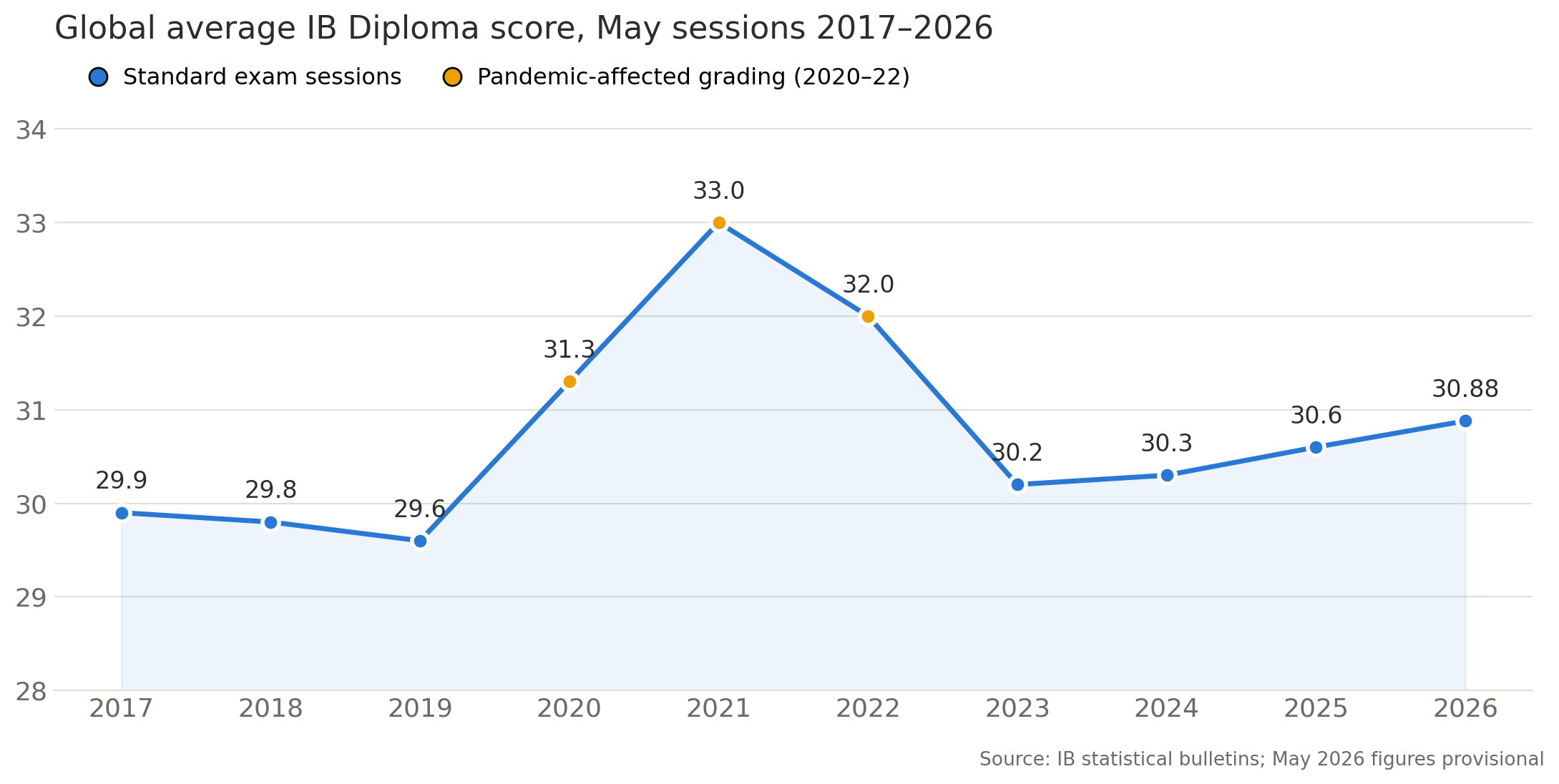
To understand this year's numbers, you need the five-year context. In 2021 and 2022, pandemic-era assessment arrangements pushed the global average to 33.0 and 32.0 respectively, figures we're unlikely to see again. When full exams returned in 2023, the average dropped sharply to 30.2, and thousands of students found themselves scoring below their predicted grades.
Since then, the story has been one of slow, steady recovery: 30.2 in 2023, 30.3 in 2024, 30.6 in 2025, and now 30.88 in 2026. Three consecutive years of gains, but still more than two points below the pandemic peak. The IB has effectively settled into a "new normal" of grading — tougher than 2021–22, slightly more generous than the 2023 trough.
Pass rates tell the same story
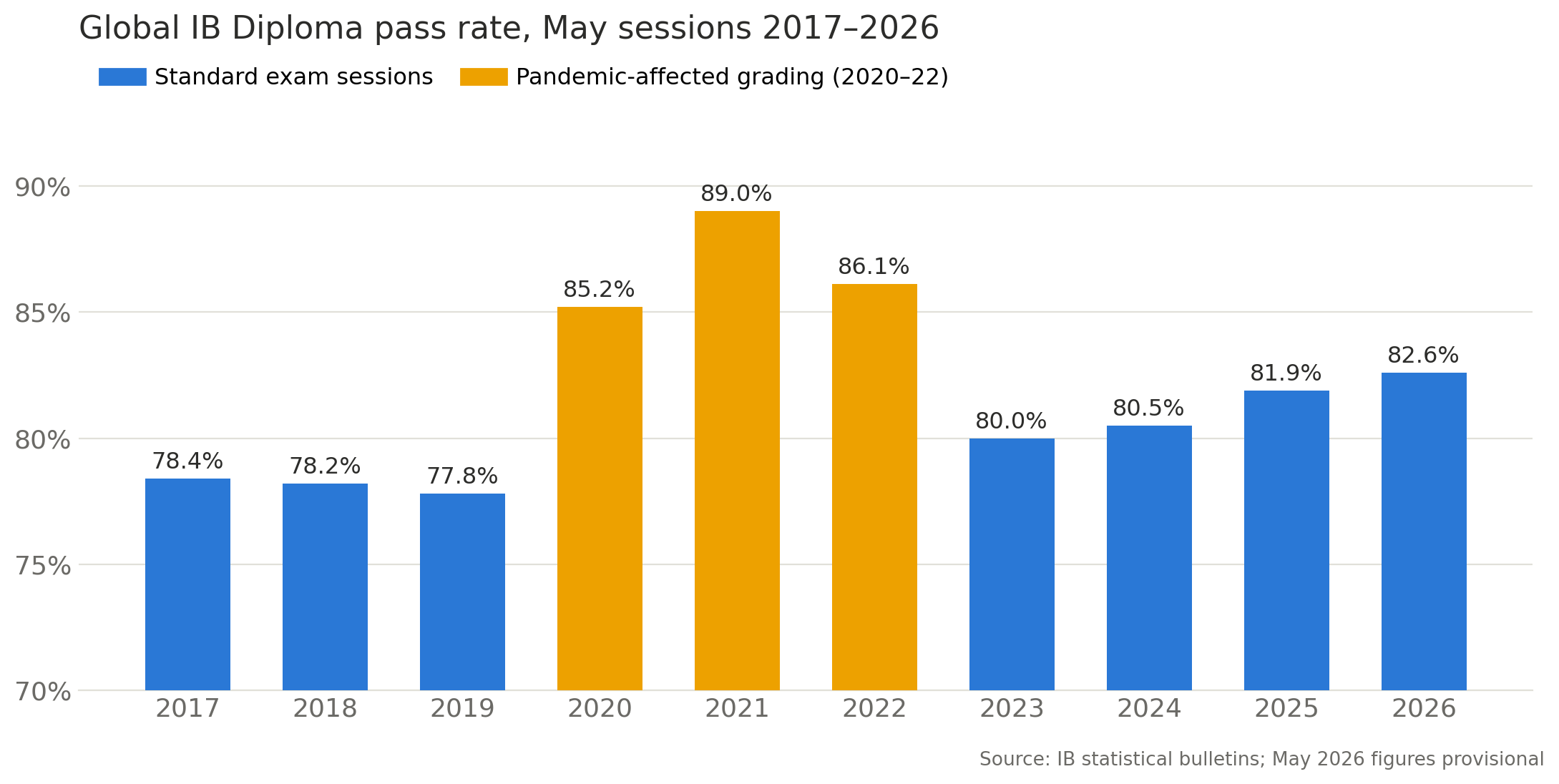
The pass rate followed the identical arc, 89.0% in 2021, sliding to 80.0% in 2023, then climbing back to 82.61% this year. That still means roughly one in six full diploma candidates worldwide does not achieve the diploma, which is worth keeping in mind when students and parents assume the DP is a formality. It isn't.
Top scores remain hard to come by
Perhaps the most important trend for ambitious students: 40+ scores are still far rarer than they were during the pandemic years. In 2021, 18.4% of full diploma candidates scored 40 or above. By 2023 that had collapsed to 8.9%, and it has only crept back to roughly 10% since. This year 10,526 students worldwide crossed the 40-point line, about 5% of everyone receiving results, or around one in ten full diploma candidates.
What this means in practice is that a 40+ score carries more weight with universities now than it did five years ago, and the margin between a 38 and a 41 often comes down to one or two subjects, usually a Higher Level maths or science, where global averages are the lowest of any subject group (Mathematics averaged just 4.4 in the most recent final bulletin, and only 4% of Maths Applications and Interpretation SL students achieve a 7). It's also why the three core bonus points from the Extended Essay and Theory of Knowledge are often the cheapest points on the table, they're the same three points whether they come from TOK or from an Physics HLexam.
Where in the world scores are highest
The regional gaps remain striking. Hong Kong led the world again with an average of 37.02, more than six points above the global mean, followed by Singapore at 35.67, the UK at 35.11 and the UAE at 34.5. These are the markets dominated by selective international schools, and they're growing fast: Hong Kong's cohort was up 10.7% year on year, Singapore's up 8.2%.

How Top IB Tutors students performed in May 2026
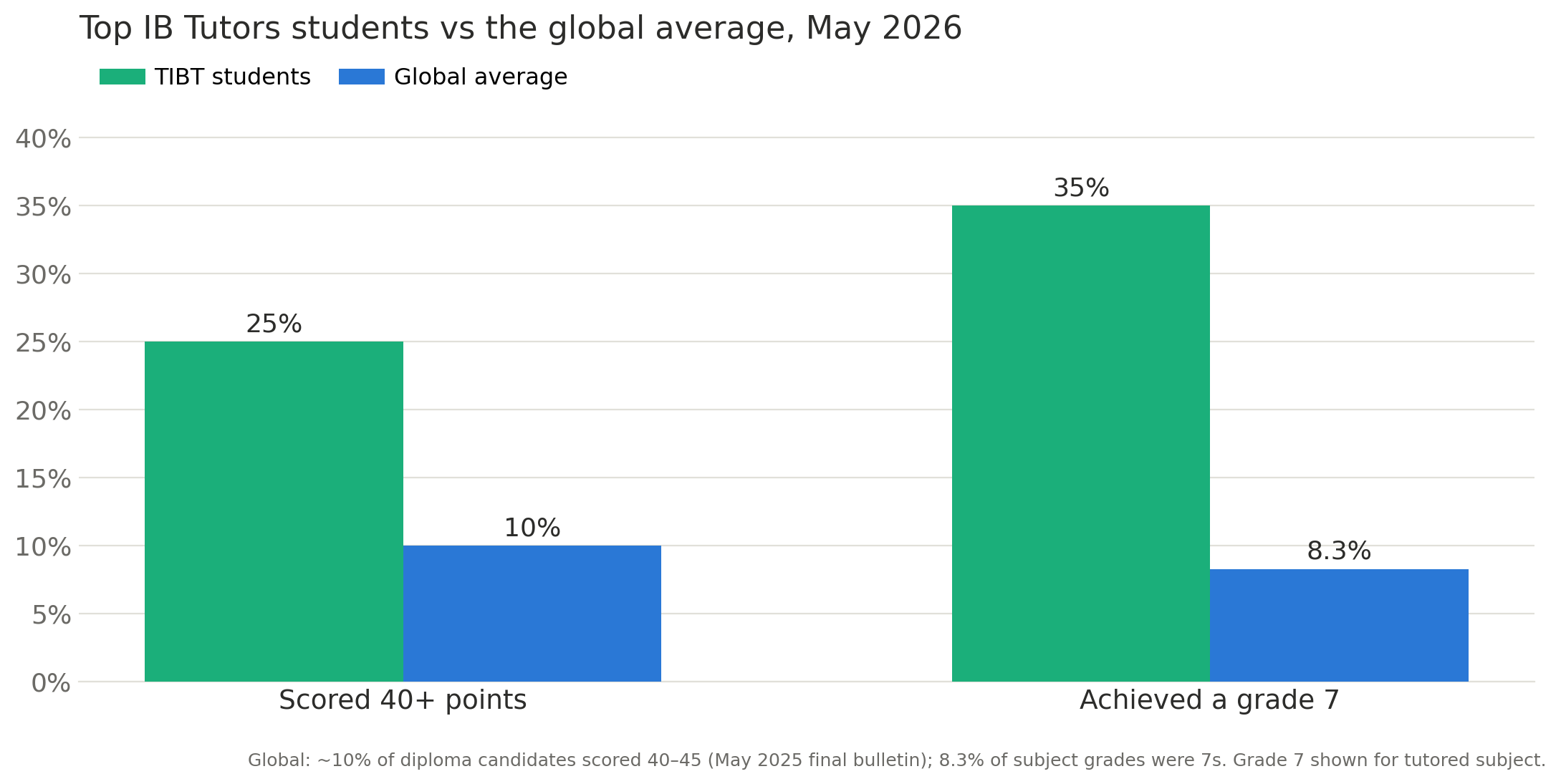
We're incredibly proud of our students this session. Around 500 TIBT students received results across all six subject groups, and the numbers speak for themselves:
- 25% of our students scored above 40 points, roughly two and a half times the global rate of around one in ten diploma candidates.
- 10% scored above 43, putting them in the top fraction of a percent of students worldwide.
- 35% of students achieved a 7 in the subject they received tutoring in. Globally, only about 8% of subject grades awarded are 7s
- 83% of students improved their grade in their tutored subject from where they started with us reported by the student
Just received your results? Here's what to do next
If your score wasn't what you hoped for, you have options. Enquiry upon Results (a remark) can be requested through your IB coordinator, and it's most worthwhile if you're within a mark or two of a grade boundary — ask your coordinator for your component marks first, and read our full guide on whether a re-mark is worth it before deciding, as grades can go down as well as up. If a remark won't get you there, retakes are available in the November 2026 and May 2027 sessions, and you only need to resit the subjects you want to improve, with the highest grade counting. If you want to prepare with a current IB teacher or examiner, our Professional tier is built exactly for this.
And if you're not sure what your results actually mean — how the subject grades, core points and diploma requirements fit together, we've broken it all down in our complete guide to understanding your IB results and our overview of how your IB score is calculated.
Starting the DP this year? Start now
For students beginning the diploma, the single biggest predictor of a strong final score is how early you get on top of your Internal Assessments and Higher Level subjects. The students who scored 40+ this session almost universally started serious preparation in the first year, not the last three months. Two habits separate them from the pack: working through past papers early and often, our expert tutors are unanimous that practice papers are the highest-value preparation there is — and learning to answer the way examiners expect by mastering IB command terms. If you're weighing up your subject choices, our tutor interviews on how they scored 7s in subjects like Maths Analysis and Approaches, Chemistry and Economics are a good place to start.
If you'd like support, whether that's rescuing a subject before a retake or building toward a 45 from day one — our tutors are all top IB graduates or professional IB teachers. Get in touch for a free consultation.


